skip to main |
skip to sidebar
The Linux Programming Interface (published in October 2010, No Starch Press, ISBN 978-1-59327-220-3) is a detailed guide and reference for system programming on Linux and UNIX systems.
With 1552 pages, 115 diagrams, 88 tables, nearly 200 example programs, and over 200 exercises, TLPI is the most comprehensive description of Linux and UNIX system programming available. The author, Michael Kerrisk, is the maintainer of the Linux man-pages project, which documents the Linux kernel and glibc APIs. He has long been active in the documentation, testing, and design review of Linux kernel-userspace interfaces.
Ordering
You can find out more information about the book using the links below.
* Detailed description / Brief description
* Reviews
* Table of contents:
o Chapter list
o Detailed: with page numbers (PDF, 19 pages) or no page numbers (HTML)
* Preface (PDF, 11 pages)
* Bibliography (PDF, 9 pages)
* Index (PDF, 60 pages)
* Sample chapters:
o Chapter 4: File I/O: The Universal I/O Model (PDF, 19 pages)
o Chapter 24: Process Creation (PDF, 18 pages)
o Chapter 52: POSIX Message Queues (PDF, 26 pages)
* Source code for the example programs:
o Source code download
o Browse all examples online
o Source code FAQ
* Training courses
* About the author
* Errata
* Translations
* Frequently asked questions
* Linux API changes since publication
The Linux Programming Interface A Linux And Unix System Programming Handbook
Read more...
Greenplum is a share nothing architecture developed based on data warehouse class postgreSQL relational database. In the July 2010 acquisition by EMC.
Beginners can be use a virtual machine to install and apply. A machine as a master instance, the owner of the two segment instances.We quickly set up to study the environment, especially their own to prepare a pdf for your reference.
install greenplum on linux virtual box
Read more...

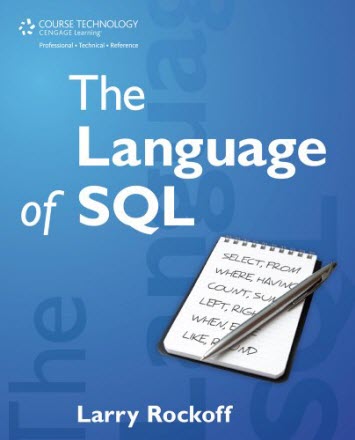
Most SQL texts attempt to serve as an encyclopedic reference on SQL syntax an approach that is counterproductive, since this information is readily available in online references published by the major database vendors. For SQL beginners, it is more important for a book to focus on general concepts and offer clear explanations and examples of what the various statements can accomplish. This is that beginner book. A number of features make The LANGUAGE OF SQL unique among introductory SQL books. First, you will not be required to download software or sit with a computer as you read the text.
The intent of this book is to provide examples of SQL usage that can be understood simply by reading them. Second, topics are organized in an intuitive and logical sequence. SQL keywords are introduced one at a time, allowing you to build on your prior understanding as you encounter new words and concepts. Finally, this book covers the syntax of three widely used databases: Microsoft SQL Server, MySQL, and Oracle, with special Database Differences boxes that will show you any differences in the syntax among those three databases, as well as instructions on how to obtain and install free versions of the databases. This is the only book you'll need to gain a working knowledge of SQL and relational databases.
Language of SQL