Showing posts with label 9i. Show all posts

Expert Oracle Database Architecture: Oracle Database 9i, 10g, and 11g Programming Techniques and Solutions

Thursday, July 28, 2011


This fully revised second edition covers the developments up to Oracle Database 11g. Each feature is taught in a proof-by-example manner, not only discussing what it is, but also how it works, how to implement software using it, and the common pitfalls associated with it.
Don’t treat Oracle Database as a black-box. Get this book. Get under the hood. Turbo-charge your career.
  • Fully revised to cover Oracle Database 11g
  • Proof-by-example approach: Let the evidence be your guide
  • Dives deeply into Oracle Databases’s most powerful features

What you’ll learn

  • Develop an evidence-based approach to problem solving
  • Manage transactions in highly concurrent environments
  • Speed access to data through table and index design
  • Manage files and memory structures for performance and reliability
  • Scale up through partitioning and parallel processing
  • Load and unload data to interface with external systems
  • Think for yourself; don’t take Tom’s word for it!

Who this book is for

This book is aimed at Oracle Database administrators, at PL/SQL and Java developers writing code to be deployed inside the database, and at developers of external applications who use Oracle Database as a data store. It is the go-to book for those wishing to create efficient and scalable applications.

Table of Contents

  1. Developing Successful Oracle Applications   
  2. Architecture Overview  
  3. Files   
  4. Memory Structures  
  5. Oracle Processes  
  6. Locking and Latching  
  7. Concurrency and Multi-versioning  
  8. Transactions 
  9. Redo and Undo  
  10. Database Tables   
  11. Indexes   
  12. Datatypes  
  13. Partitioning  
  14. Parallel Execution  
  15. Data Loading and Unloading 
  16. Data Encryption 


Expert Oracle Database Architecture: Oracle Database 9i, 10g, and 11g Programming Techniques and Solutions

Read more...

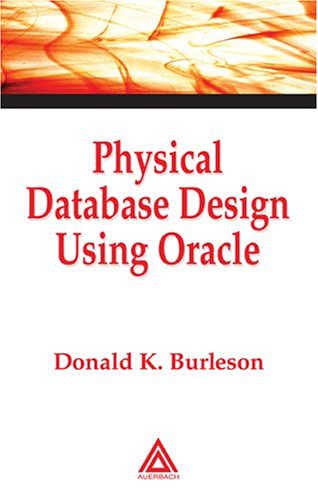
Physical Database Design Using Oracle

Saturday, June 25, 2011


Physical Database Design Using Oracle

This book contains information obtained from authentic and highly regarded sources. Reprinted material is quoted with permission, and sources are indicated. A wide variety of references are listed. Reasonable efforts have been made to publish reliable data and information, but the author and the publisher cannot assume responsibility for the validity of all materials or for the consequences of their use.

Read more...

ORACLE 9i Installation Key slides for installing the database

Monday, June 6, 2011

Read more...

Developer 2000 Forms and Reports Oracle 9i

Saturday, June 4, 2011

Read more...

Best Implementation Practices for Discoverer

Wednesday, June 1, 2011

Read more...

oracle9i database Real Application Clusters on Linux

Saturday, May 28, 2011

oracle9i database Real Application Clusters on Linux Powerpoint Presentation


Read more...

D70842GC10 BEA WebLogic Portal 9/10: System Administration

Saturday, May 21, 2011

What you will learn
This course trains experienced BEA WebLogic Server 9/10 system administrators on the configuration and management of applications built with BEA WebLogic Portal 9/10. Students will learn how to stage and tune portal applications and their relational data, and to propagate these changes to a highly available production environment. Course labs have been validated on BEA WebLogic Portal 10.
 
Learn to:
Initialize a domain and database to support BEA WebLogic Portal applications
Propagate portal data from staging to production environments
Configure and secure portal desktop components

Prerequisites
BEA WebLogic Server domains, servers and clusters
BEA WebLogic Server performance tuning
Security realms and providers
Keystores and certificates
Data sources
Security Assertion Markup Language (SAML)
Familiarity with essential concepts of BEA WebLogic Portal
Ant scripting fundamentals
BEA WebLogic Server 9/10: Advanced System Administration


Course Objectives
Propagate portal data from staging to production environments
Manage and secure portal resources
Delegate portal administrative capabilities
Initialize a domain and database to support BEA WebLogic Portal applications
Manage federated portal resources
Configure and tune a content repository
Index and search content and other information using autonomy


Course Topics

Product installation

Portal production architecture

Portal domains and applications

Product database schema

Shared libraries

Portal deployment plans

BEA WebLogic Portal Administration Console

Portal desktop management

Community management

Federated portal administration

Content repository administration

User profile management

Visitor entitlements

Delegated administration

Portal cache manager

Autonomy search administration

Propagation tool

BEA AquaLogic Analytics


Read more...

Oracle9i Real Application Clusters D34316 Oracle9i Real Application Clusters

Contents

What's New in Real Application Clusters?

Part I Cluster Database Processing Fundamentals

1 Introduction to Real Application Clusters

    What Is Real Application Clusters?
    The Benefits of Real Application Clusters

        Lower Overall Cost of Ownership
        Expanded Scalability
        High Availability
        Transparency
        Buffer Cache Management
        Row Locking
        Multiversion Read Consistency
        Recovery Manager, Online Backups, and Archiving

2 Real Application Clusters Systems Architecture

    Overview of Cluster Database System Components

        Nodes and Their Components
        Cluster Interconnect and Interprocess Communication (Node-to-Node)

    Memory, Interconnect, and Storage
    The High-Speed IPC Interconnect
    Shared Disk Storage and the Cluster File System Advantage

3 Real Application Clusters Software Architecture

    The Operating System-Dependent Clusterware

        The Cluster Manager
        The Node Monitor
        The Interconnect

    Real Application Clusters Shared Disk Components
    Real Application Clusters-Specific Daemon and Instance Processes

        The Global Services Daemon
        Instance Processes Specific to Real Application Clusters

    The Global Cache and Global Enqueue Service

        Application Transparency
        Global Resource Directory with Distributed Architecture
        Resource Mastering and Affinity
        GCS and GES Interaction with the Cluster Manager

4 Scalability in Real Application Clusters

    Scalability Features of Real Application Clusters
    All System Types Benefit from Real Application Clusters

        Transaction Systems and Real Application Clusters
        Data Warehouse Systems and Real Application Clusters

    Levels of Scalability

        Network Scalability
        Network Scalability and Client/Server Connectivity
        Operating System Scalability

Part II Resource Coordination in Real Application Clusters
5 Real Application Clusters Resource Coordination

    Overview of Real Application Clusters Resource Coordination

        The Contents of the Global Resource Directory
        Real Application Clusters Synchronization Processes
        Enqueues
        Past Images

    Resource Modes and Roles

        Resource Modes
        Resource Roles
        Global Cache Service Operations

    System Change Number Processing

        Lamport SCN Generation

6 Cache Fusion and the Global Cache Service

    Overview of Cache Fusion Processing

        Concurrent Reads on Multiple Nodes
        Concurrent Reads and Writes on Different Nodes
        Concurrent Writes on Different Nodes
        Write Protocol and Past Image Tracking

    Resource Control, Cache-to-Cache Transfer, and Cache Coherency
    Block Access Modes and Buffer States
    Cache Fusion Scenarios

        Requesting a Changed Block for a Modification Operation
        Writing Blocks to Disk

    Real Application Clusters Recovery and Cache Fusion

7 Resource Coordination by the Global Enqueue Service

    Global Enqueue Service Processing
    Global Enqueue Concurrency Control
    Resources Managed by the Global Enqueue Service

        Dictionary Cache Locks
        Library Cache Locks

Part III Implementing Real Application Clusters
8 Real Application Clusters Storage Considerations

    Overview of Storage in Real Application Clusters
    Datafiles in Real Application Clusters

        Datafile Verification in Real Application Clusters
        Adding Datafiles in Real Application Clusters

    Parameter File Storage in Real Application Clusters

        Location of the Server Parameter File

    Redo Log File Storage in Real Application Clusters
    Automatic Segment-Space Management
    Managing Undo Space in Real Application Clusters

        Private and Public Rollback Segments

9 Manageability Tools for Real Application Clusters Environments

    Overview of Manageability in Real Application Clusters
    Manageability for Real Application Clusters Installation, Setup, and Configuration
    Manageability for Real Application Clusters Administration

        Oracle Enterprise Manager
        The Database Configuration Assistant
        The Server Control (SRVCTL) Utility
        Global Services Daemon Administration Commands

    Manageability for Real Application Clusters Performance Monitoring

        Monitoring Performance with Oracle Enterprise Manager
        Monitoring Performance with Statspack

    Manageability for Real Application Clusters Backup and Recovery

Part IV High Availability and Real Application Clusters
10 High Availability Concepts and Best Practices in Real Application Clusters

    Understanding High Availability
    Configuring Real Application Clusters for High Availability

        Cluster Components and High Availability

    Disaster Planning
    Failure Protection Validation
    Failover and Real Application Clusters

        Failover Basics
        Client Failover
        Uses of Transparent Application Failover
        Server Failover

    Failover Processing in Real Application Clusters

        Detecting Failure
        Reorganizing Cluster Membership
        Performing Database Recovery

    High Availability Configurations

        Default N-Node Configurations
        Basic High Availability Configurations
        Shared High Availability Node Configurations
        Full Active Configurations with Real Application Clusters Guard II

    Deploying High Availability

Part V Reference
A Restrictions

    Compatibility
    Restricted SQL Statements
    Maximum Number of Datafiles

B Using Multi-Block Lock Assignments (Optional)

    When to Use Locks
    How to Use Locks
    Lock Granularity
    Understanding Lock Management


Read more...

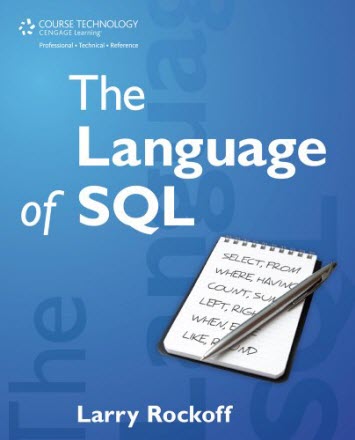
The Language of SQL

Tuesday, February 15, 2011


Most SQL texts attempt to serve as an encyclopedic reference on SQL syntax an approach that is counterproductive, since this information is readily available in online references published by the major database vendors. For SQL beginners, it is more important for a book to focus on general concepts and offer clear explanations and examples of what the various statements can accomplish. This is that beginner book. A number of features make The LANGUAGE OF SQL unique among introductory SQL books. First, you will not be required to download software or sit with a computer as you read the text.

The intent of this book is to provide examples of SQL usage that can be understood simply by reading them. Second, topics are organized in an intuitive and logical sequence. SQL keywords are introduced one at a time, allowing you to build on your prior understanding as you encounter new words and concepts. Finally, this book covers the syntax of three widely used databases: Microsoft SQL Server, MySQL, and Oracle, with special Database Differences boxes that will show you any differences in the syntax among those three databases, as well as instructions on how to obtain and install free versions of the databases. This is the only book you'll need to gain a working knowledge of SQL and relational databases.


Language of SQL


Read more...

1z0-402 & 1z0-007 Item Bank 100% coverage of Exam

Sunday, January 24, 2010


OCA 042 exam history, there have been two sets of item bank, which means kinds of questions once changes have taken place. Now the popular item bank is the second item bank, a total of 168 questions, the basic guarantee clearance. However, individual bad luck, saying that problems encountered by all the new hung up. In fact, problems encountered are not new, but the old questions - the first set of questions.  So put these two sets of item bank to do the merger.  Item bank so far back that 296 people who reflect the coverage of 100%. 


Download Password: itembank


Read more...

Oracle 9i Fundamentals I Exam Cram 2 (Exam 1Z0-031)

Saturday, December 12, 2009


Description:

Whether you're studying for the Oracle 9i Fundamentals I exam or just need to take the New Features update exam, Oracle 9i Funamentals I Exam Cram 2 can help you get certified. This efficient guide follows the exam objectives clearly and concisely. New Features materials are also included in the book, as well as a full-customizable practice test engine on CD. Oracle 9i Fundamentals I Exam Cram 2 is your smartest way to get certified.

Download Link:

Read more...

D12860GC10 Oracle9i Database Space and Transaction Management

Wednesday, November 11, 2009


D12860GC10 Oracle9i Database Space and Transaction Management
(PPT)


Download Link:


Read more...

D17106CN10 Oracle 9i DBA OCP Upgrade exam sprint


D17106CN10 Oracle 9i DBA OCP Upgrade exam sprint
(PPT)


Download Link:


Read more...

Oracle SQL Internals Handbook

Monday, October 26, 2009


Download Link:


Read more...

Oracle 9i Database Administration Exam Dumps

Sunday, September 13, 2009


Oracle 9i Database Administration Exam Dumps

Preview:


1z0-007 : Introduction to Oracle 9i SQL
1z0-030 : Oracle 9i Database: New Features for Administration
1z0-031 : Oracle 9i Database: Fundamentals-I
1z0-032 : Oracle 9i Database: Fundamentals-II
1z0-033 : Oracle 9i Database: Performance Tuning
1z0-035 : Oracle 9i DBA New Features for Oracle 7.3 and Oracle 9i OCPs

Download Link:

Read more...

Oracle 9i Dumps

Friday, September 11, 2009


Oracle 9i Exam Dumps


Preview:


1z0-001 : Introduction to Oracle SQL and PL/SQL
1z0-101 : Develop PL/SQL Program Units
1z0-131 : Oracle 9i Build Internet Application-I
1z0-132 : Oracle 9i Build Internet Application-II
1z0-140 : Oracle 9i Forms Developer New Features
1z0-140 : Oracle 9i Forms Developer Build Internet Applications
1z0-147 : Oracle 9i Program with PL/SQL


Download Link:


Read more...

Oracle9i: SQL CBTs

Thursday, July 23, 2009


Introduction to Oracle9i: SQL

Author - Gavin JT Powell / Certified Oracle Instructor
Total Time - 12 Hours

The Introduction to Oracle SQL and PL/SQL tutorial will cover the relational Database Model, the Oracle Architecture and the Physical database. The tutorial is aimed at programmers, and individuals who have had prior SQL and relational database experience.


Gavin Powell, your instructor, will begin teaching you many Oracle tools such as the SQL Plus, SQL Plus Worksheet, and Oracle Enterprise Manager. This tutorial will explain how to maintain the Logical Database, and the difference between the Logical Database and the Physical database. You will be guided, in great detail, in the following areas: retrieving, changing, adding, and deleting data from the Database. From there, you will learn about Logical Database objects, Security, Select Statements, and much more. Introduction to Oracle SQL and PL/SQL will cover areas for the Oracle Certification course (1Z0-007).

Welcome
Welcome
Useful Web Sites
What is Oracle Software?
The History of Databases
The History of Oracle
About this Course

The Relational Database Model
The Concerts Schema
Normalization pt. 1
Normalization pt. 2
Denormalization pt. 1
Denormalization pt. 2

Oracle SQL and PL/SQL Tools
What are the Oracle SQL and PL/SQL Tools?
SQL Plus
Formatting Output
SQL Plus Worksheet
iSQL Plus
Oracle Enterprise Manager
Oracle Enterprise Manager pt. 2

The Architecture of Oracle
The Oracle Database and Oracle Instance pt. 1
The Oracle Database and Oracle Instance pt. 2
Control Files, Logging, Archiving and Recoverability

Creating Database Objects
Oracle Simple Datatypes pt. 1
Oracle Simple Datatypes pt. 2
Oracle Complex and Object Datatypes
Types of Tables
Methods of Table Creation
Create Table Syntax
Example Table Creations pt. 1
Example Table Creations pt. 2
Altering and Dropping Tables pt. 1
Altering and Dropping Tables pt. 2
What are Constraints?
Creating, Changing and Dropping Constraints
Types of Indexes pt. 1
Types of Indexes pt. 2
Creating, Altering and Dropping Indexes
Sequence Counters
Synonyms
Views pt. 1
Views pt. 2
Metadata Views and Error Messages

Users and Security
Schemas, Users, Privileges and Roles pt. 1
Schemas, Users, Privileges and Roles pt. 2
Schemas, Users, Privileges and Roles pt. 3
Types of Users
Creating Users pt. 1
Creating Users pt. 2
Altering and Dropping Users
Security
System Privileges
Object Privileges
Granting and Revoking Privileges pt. 1
Granting and Revoking Privileges pt. 2
Grouping Privileges Using Roles pt. 1
Grouping Privileges Using Roles pt. 2
Setting Roles

Retrieving Data from the Database
The SELECT Statement pt. 1
The SELECT Statement pt. 2
The SELECT Statement pt. 3
Types of SELECT Statement pt. 1
Types of SELECT Statement pt. 2
The DUAL Table pt. 1
The DUAL Table pt. 2
What is a NULL?
Pseudo-Columns pt. 1
Pseudo-Columns pt. 2
More About SQL Plus Formatting pt. 1
More About SQL Plus Formatting pt. 2
More About SQL Plus Formatting pt. 3

Oracle Built In Functions
Types of Functions pt. 1
Types of Functions pt. 2
String Functions pt. 1
String Functions pt. 2
String Functions pt. 3
Number Functions
Date Functions pt. 1
Date Functions pt. 2
Other Functions pt. 1
Other Functions pt. 2
Datatype Conversion Functions pt. 1
Datatype Conversion Functions pt. 2
Custom Functions Using PL/SQL

Filtering SELECT Statements
The WHERE Clause
Conditional Comparisons
Using the WHERE Clause
Using Logical Operators pt. 1
Using Logical Operators pt. 2
Using Conditional Comparisons pt. 1
Using Conditional Comparisons pt. 2

Sorting SELECT Statements
The ORDER BY Clause
Sorting Methods

Joining Multiple Tables
What is a Join?
Two Join Syntax Formats
Types of Joins pt. 1
Types of Joins pt. 2
Types of Joins pt. 3
Cross Join or Cartesian Product
Natural or Inner Join pt. 1
Natural or Inner Join pt. 2
Natural or Inner Join pt. 3
Outer Join pt. 1
Outer Join pt. 2
Self Join
Equi-Joins, Anti-Joins and Range-Joins
Mutable and Complex Joins

Summarizing with GROUP BY
What does GROUP BY do?
The GROUP BY Clause
Types of Grouping Functions pt. 1
Types of Grouping Functions pt. 2
Special Behavior pt. 1
Special Behavior pt. 2
Summary Functions
Statistical Functions
Other Functions
Filtering GROUP BY with the HAVING Clause
Extending the GROUP BY Clause pt. 1
Extending the GROUP BY Clause pt. 2

Subqueries and Other Advanced Queries
What is a Subquery?
Types of Subqueries
Comparison Conditions Revisited pt. 1
Comparison Conditions Revisited pt. 2
Comparison Conditions Revisited pt. 3
Regular vs. Correlated Subqueries
Nested Subqueries and Replacing Joins
Where can Subqueries be Used?
Hierarchical Queries
Set Operators and Composite Queries

Oracle Data Manipulation Language (DML)
What is DML?
Adding Data with INSERT
Multiple Table INSERT pt. 1
Multiple Table INSERT pt. 2
Changing Data with UPDATE pt. 1
Changing Data with UPDATE pt. 2
Remove Data with DELETE or TRUNCATE pt. 1
Remove Data with DELETE or TRUNCATE pt. 2
Merging Tables with MERGE pt. 1
Merging Tables with MERGE pt. 2
Transactional Control
Locking and Visibility of Data Changes
COMMIT vs ROLLBACK

PL/SQL (Programming Language SQL)
What is PL/SQL?
Modular Structure
Anonymous Procedures
Named Procedures
Functions
Packages
Triggers pt. 1
Triggers pt. 2
Variables and Types in PL/SQL pt. 1
Variables and Types in PL/SQL pt. 2
Objects and Object Datatypes
More About Objects pt. 1
More About Objects pt. 2

Programming Control Structures
Simple Database Access in PL/SQL
Cursors and Implicit Cursors pt. 1
Cursors and Implicit Cursors pt. 2
Explicit Cursors pt. 1
Explicit Cursors pt. 2
Dynamic SQL
Provided (DBMS_) Packages


Download Links:


http://www.mediafire.com/download.php?tjezztgmnyy


http://www.mediafire.com/download.php?ayymmyow1zw


http://www.mediafire.com/download.php?4izkmixy5yd


http://www.mediafire.com/download.php?imdddwdmj2m


Read more...
Related Posts with Thumbnails

Sponser Links

Followers

Sponser Links

  ©2009-10 | Disclaimer

Back to TOP