Showing posts with label Database Management. Show all posts

Data Driven Security: Analysis, Visualization and Dashboards

Wednesday, April 30, 2014


Uncover hidden patterns of data and respond with countermeasures Security professionals need all the tools at their disposal to increase their visibility in order to prevent security breaches and attacks. This careful guide explores two of the most powerful data analysis and visualization. You?ll soon understand how to harness and wield data, from collection and storage to management and analysis as well as visualization and presentation. Using a hands-on approach with real-world examples, this book shows you how to gather feedback, measure the effectiveness of your security methods, and make better decisions.

Everything in this book will have practical application for information security professionals. Helps IT and security professionals understand and use data, so they can thwart attacks and understand and visualize vulnerabilities in their networks Includes more than a dozen real-world examples and hands-on exercises that demonstrate how to analyze security data and intelligence and translate that information into visualizations that make plain how to prevent attacks Covers topics such as how to acquire and prepare security data, use simple statistical methods to detect malware, predict rogue behavior, correlate security events, and more Written by a team of well-known experts in the field of security and data analysis Lock down your networks, prevent hacks, and thwart malware by improving visibility into the environment, all through the power of data and Security Using Data Analysis, Visualization, and Dashboards.

Data Driven Security: Analysis, Visualization and Dashboards

Read more...

Pro Entity Framework 4.0

Wednesday, April 23, 2014


Previously, SQL developers have been able to almost entirely ignore the SQLCLR and treat it as a peripheral technology-almost an extension to the main product. With the advent of LINQ and the Entity Framework, this is no longer the case, and the SQLCLR is moving to the center stage. It's a powerful product but, for many, it is an entirely new way of working with data. Pro Entity Framework 4.0 will help readers understand the implications of the Entity Framework and how it can be used to change their development practices and make their databases more powerful and flexible. Since many readers will be encountering this subject for the first time, the book will create an inclusive environment in which the concepts of .NET development are approached from the perspective of the Relational T-SQL developer to foster a sense of shared-ownership in keeping with Microsoft's latest best practices.
Comprehensive coverage of the new greater and more challenging integration with .NET 3.5
Written from a real-world perspective and examines the features offered by LINQ and the Entity Framework that will help solve problems experienced by professional developers
Contains insight, interpretation, analysis, and evangelism instead of just plain fact
What you'll learn
Examine the SQLCLR architecture.
Learn the fundamentals of LINQ.
Use LINQ with SQL and datasets.
Extend LINQ.
Gain a holistic view of the features of LINQ and the Entity Framework and how they segue with other features of the .NET Framework and native features of the operating system.
Write practical applications of LINQ and the Entity Framework.
Who this book is for
.NET and SQL developers who use Microsoft SQL Server 2008 as their back-end database. Database administrators who create, manage, and secure those databases.

Pro Entity Framework 4.0

Read more...

Access 2013 For Dummies

Thursday, April 17, 2014


Microsoft Access allows you to store, organize, view, analyze, and share data; the new Access 2013 release enables you to build even more powerful, custom database solutions that integrate with the web and enterprise data sources. Access 2013 For Dummies covers all the new features of the latest version of Accessand serves as an ideal reference, combining the latest Access features with the basics of building usable databases. You'll learn how to create an app from the Welcome screen, get support for your desktop databases, and much more

Access 2013 For Dummies

Read more...

Beginning Databases with PostgreSQL: From Novice to Professional

Wednesday, April 16, 2014

PostgreSQL is one of the world's most popular Open Source relational database systems. It is renowned for its wide range of capabilities, and its ability to perform functions not available in other databases. The forthcoming release of PostgreSQL 8.0 in late 2004/early 2005 will include major revisions, such as Win32 Native Support, and this book will provide the tools for anyone making the transition or learning about PostgreSQL for the first time.

Beginning Databases with PostgreSQL: From Novice to Professional

Read more...

Oracle Database 11g Administration-I 17-08-2012

Sunday, April 13, 2014


Oracle Database 11g Administration-I 17-08-2012

Read more...

MySQL Administrators Bible

Tuesday, December 25, 2012


With special focus on the next major release of MySQL, this resource provides a solid framework for anyone new to MySQL or transitioning from another database platform, as well as experience MySQL administrators. The high-profile author duo provides essential coverage of the fundamentals of MySQL database management?including MySQL?s unique approach to basic database features and functions?as well as coverage of SQL queries, data and index types, stores procedure and functions, triggers and views, and transactions. They also present comprehensive coverage of such topics as MySQL server tuning, managing storage engines, caching, backup and recovery, managing users, index tuning, database and performance monitoring, security, and more.


MySQL Administrators Bible

Read more...

Build Your Own Database Driven Web Site Using PHP & MySQL


Build Your own Database Driven Web Site Using PHP & MySQL is a practical hands-on guide to learning all the tools, principles and techniques needed to build a fully functional database-driven web site using PHP & MySQL.

This book covers everything from installing PHP & MySQL under Windows, Linux, and Mac through to building a live web-based content management system.


While this is essentially a beginners book, it also covers more advanced topics such as the storage of binary data in MySQL, and cookies and sessions in PHP. It comes complete with a set of handy reference guides for PHP & MySQL that include:

MySQL syntax
MySQL functions
MysQL column types
PHP functions for working with MySQL
Who should read this book?
At around 479 pages, this book is an easy read. As you move through the book you’ll quickly notice that it’s written in a clear tutorial format that’s easy to understand, and illustrated with plenty of screenshots and diagrams, providing quick visual cues. If you hate wading through dry “academic-style how to” texts, this book will be a breath of fresh air to you.

If you’ve never built a database driven web site and you’re looking to go beyond the limitations of a static site, this book will start you off in no time.

If you’ve created database driven web sites before, the extensive PHP and MySQL reference guides included will ensure this book remains an extremely handy desk reference.


Build Your Own Database Driven Web Site Using PHP & MySQL, 4th Edition


Read more...

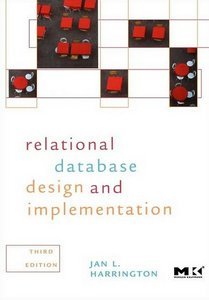
Relational Database Design and Implementation: Clearly Explained, 3 Edition

Wednesday, September 19, 2012


Fully revised, updated, and expanded, Relational Database Design and Implementation, Third Edition is the most lucid and effective introduction to the subject available for IT/IS professionals interested in honing their skills in database design, implementation, and administration. This book provides the conceptual and practical information necessary to develop a design and management scheme that ensures data accuracy and user satisfaction while optimizing performance, regardless of experience level or choice of DBMS.
The book begins by reviewing basic concepts of databases and database design, then briefly reviews the SQL one would use to create databases. Topics such as the relational data model, normalization, data entities and Codd's Rules (and why they are important) are covered clearly and concisely but without resorting to "Dummies"-style talking down to the reader.
Supporting the book's step-by-step instruction are three NEW case studies illustrating database planning, analysis, design, and management practices. In addition to these real-world examples, which include object-relational design techniques, an entirely NEW section consisting of three chapters is devoted to database implementation and management issues.


* Principles needed to understand the basis of good relational database design and implementation practices.
* Examples to illustrate core concepts for enhanced comprehension and to put the book's practical instruction to work.
* Methods for tailoring DB design to the environment in which the database will run and the uses to which it will be put.
* Design approaches that ensure data accuracy and consistency.
* Examples of how design can inhibit or boost database application performance.
* Object-relational design techniques, benefits, and examples.
* Instructions on how to choose and use a normalization technique.
* Guidelines for understanding and applying Codd's rules.
* Tools to implement a relational design using SQL.
* Techniques for using CASE tools for database design.


Relational Database Design and Implementation: Clearly Explained, 3 Edition 

Read more...

Android Database Programming

Friday, September 14, 2012


  • Exploit the power of data-centric and data-driven Android applications with this practical tutorial
  • Master the skills to build data-centric Android applications
  • Go beyond just code by challenging yourself to think about practical use-cases with SQLite and others
  • Focus on flushing out high level design concepts, before drilling down into different code examples
In Detail
We live in an increasingly data-centric and data-driven world. On top of that we live in a very mobile-centric world with the rise of Android smart phones and tablet devices and the surge in demand for the Android platform. Along with the demand for more data, there is a demand for efficient, "snappy" applications, and so developers need to have a strong understanding of when different data storage methods are appropriate and when they are not. Mastering how to use these two fields to successfully create a powerful application will help you boost your knowledge and skills in this area. "Android Database Programming" is designed to help developers create and design data-centric mobile applications on Google's Android platform. As the world goes increasingly mobile and as consumers' demand for data-centric applications rises, knowing how to combine the two effectively will become an increasingly important asset to have as a developer. The book starts by looking at the various local data storage methods on Android, and finishes off by examining external databases and ways you can utilize them from within an Android application. This book starts by looking at local data storage methods, focusing on writing SQLite databases for your application and also looking at ways to bind these databases to the user interface. The book, through its practical approach, strives to teach you by examples. Each chapter focuses on flushing out high level design concepts, before drilling down into different code examples.


Android Database Programming By Jason Wei

Read more...

Beginning Database Design From Novice to Professional

Friday, July 20, 2012


Beginning Database Design: From Novice to Professional provides short, easy-to-read explanations of how to get database design right the first time. This book offers numerous examples to help you avoid the many pitfalls that entrap new and not-so-new database designers. Through the help of use cases and class diagrams modeled in the UML, youll learn how to discover and represent the details and scope of the problem in question.
Database design is not an exact science, and solid database design principles and examples help demonstrate the consequences of simplifications and pragmatic decisions. The rationale is to try to keep it simple, but allow room for development as situations change or resources permit. The book also features an introduction for implementing the final design in a relational database.


Beginning Database Design From Novice to Professional

Read more...

Pattern Discovery Using Sequence Data Mining Applications and Studies

Tuesday, July 17, 2012


Sequential data from Web server logs, online transaction logs, and performance measurements is collected each day. This sequential data is a valuable source of information, as it allows individuals to search for a particular value or event and also facilitates analysis of the frequency of certain events or sets of related events. Finding patterns in sequences is of utmost importance in many areas of science, engineering, and business scenarios.


Pattern Discovery Using Sequence Data Mining: Applications and Studies provides a comprehensive view of sequence mining techniques and presents current research and case studies in pattern discovery in sequential data by researchers and practitioners. This research identifies industry applications introduced by various sequence mining approaches.


Pattern Discovery Using Sequence Data Mining Applications and Studies


password : amaderforum

Read more...

Database Solutions A step-by-step guide to building databases 2nd edition

Friday, March 23, 2012


Database Solutions:A Step-by-Step Guide to Building Databases by Thomas Connolly & Carolyn Begg
Book Description
Series: Database Solutions | Publication Date: December 23, 1999
Do you carry the world on your shoulders? Does every request for a new business system from senior management land on your desk? Are you responsible for designing and creating the databases that keep your business running? Would you like to make the design and build process smoother, quicker and more reliable?


Database Solutions A step-by-step guide to building databases 2nd edition

Read more...

pdf lectures on dbms by iit madras professor

about the author:-

Prof. P.Sreenivasa Kumar
Department of Computer Science & Engineering , IIT Madras.

Syllabus:
PDF


Lectures Topics
Lecture 1 Introduction to database Systems
Lecture 2 Entity Relationship Model
Lecture 3 Relational Model
Lecture 3.1 Tuple Relational Calculus
Lecture 4 The SQL Standard
Lecture 5 File Organizing and Indexing
Lecture 6 Database design and Normal forms
these are high quality notes for steady reference from the professors of iit madras, most prestigious technical institution in india.


Read more...

Hands-On Database

Sunday, March 11, 2012


Hands-On Database uses a scenario-based approach that shows readers how to build a database by providing them with the context of a running case throughout each step of the process

Hands-On Database

Read more...

PeopleSoft for the Oracle DBA


PeopleSoft for the Oracle DBA, Second Edition stands on the boundary between the PeopleSoft application and the Oracle database. This new edition of David Kurtz’s book is freshly revised, showing how to tame the beast and manage Oracle successfully in a PeopleSoft environment.

You’ll learn about PeopleSoft’s Internet architecture and its use of Oracle’s Tuxedo Application Server. You’ll find full coverage of key database issues such as indexing, connectivity, and tablespace usage as they apply to PeopleSoft. Kurtz also provides some of the best advice and information to be found anywhere on managing and troubleshooting performance issues in a PeopleSoft environment. The solid coverage of performance troubleshooting is enough by itself to make PeopleSoft for the Oracle DBA a must-have book for any Oracle Database administrator working in support of a PeopleSoft environment.


Explains PeopleSoft’s technical architecture as it relates to Oracle Database

Demonstrates how to instrument and measure the performance of PeopleSoft
Provides techniques to troubleshoot and resolve performance problems

What you’ll learn


Understand PeopleSoft’s technical architecture and the structure of a PeopleSoft database

Measure performance of the various tiers in the application
Pinpoint and resolve performance problems within the code
Configure server processes for optimal performance
Monitor and manage your PeopleSoft installation using Oracle Enterprise Manager
Take full advantage of the PeopleTools Performance Monitor that is new in version 8.44

Who this book is for

PeopleSoft for the Oracle DBA is written for database administrators charged with supporting a PeopleSoft system, and especially those administrators responsible for troubleshooting and resolving PeopleSoft performance issues. PeopleSoft for the Oracle DBA also appeals to PeopleSoft administrators and developers who desire a better understanding of how PeopleSoft functions in an Oracle Database environment.

PeopleSoft for the Oracle DBA, 2nd Edition


Read more...

Expert Indexing in Oracle Database 11g


Expert Indexing in Oracle Database 11g is about the one database structure at the heart of almost all performance concerns: the index. Database system performance is one of the top concerns in information technology today. Administrators struggle to keep up with the explosion of access and activity driven by the proliferation of computing into everything from phones to tablets to PCs in our increasingly connected world. At the heart of any good-performing database lies a sound indexing strategy that makes appropriate use of indexing, and especially of the vendor-specific indexing features on offer.

Few databases fully exploit the wealth of data access mechanisms provided by Oracle. Expert Indexing in Oracle Database 11g helps by bringing together information indexing and how to use it into one, convenient and blissfully short volume that you can read quickly and have at your fingertips for reference. Learn the different types of indices available and when each is best applied. Recognize when queries aren’t using indices as you intend. Manage your indexing for maximum performance. Let Expert Indexing in Oracle Database 11g be your guide to deep mastery of the most fundamental performance optimization structure in Oracle Database.


Explains how indices work, how they help, and how they hinder

Demystifies the various index choices
Describes the database administration chores associated with indices

What you’ll learn


Create an overall indexing strategy to guide your decisions

Choose the correct indexing mechanisms for your applications
Manage and maintain indices to avoid degradation and preserve efficiency
Take better advantage of underused index types such as index-organized tables
Choose the appropriate columns to index, with confidence
Blend partitioning and materialized views into your indexing strategy

Who this book is for

Expert Indexing in Oracle Database 11g is for all levels of database administrators and application developers who are struggling with the database performance and scalability challenge. Any database administrator involved with indexing, which is any database administrator period, will appreciate the wealth of advice packed into this gem of a book.


Read more...

Two Minute SQL Server Stumpers

Friday, March 9, 2012


Whether you're practicing for an exam or interview, or just wanting to see who's got the biggest SQL Server brain in your office, this book is perfect. Containing 100 SQL Server Central Questions of the Day, this book is a great way to test yourself or increase your knowledge Editorial Review Challenge you in a variety of ways about the different aspects of SQL Server. Some of the questions are arcane, some very common, but you'll learn something and the wide range of questions will help you get your mind agile and ready for some quick thinking. This version is a compilation of SQL Server 2005 and SQL Server 2008 questions, to bring you up to date on the latest version of SQL Server. So read on, in order, randomly, just start going through them, but do yourself a favor and think about each before turning the page. Challenge yourself and see how well you do. sql server dba, mirosoft sql server 2008, inside sql server kalen.


Read more...

Mining of Massive Datasets


The popularity of the Web and Internet commerce provides many extremely large datasets from which information can be gleaned by data mining. This book focuses on practical algorithms that have been used to solve key problems in data mining and which can be used on even the largest datasets. It begins with a discussion of the map-reduce framework, an important tool for parallelizing algorithms automatically. The authors explain the tricks of locality-sensitive hashing and stream processing algorithms for mining data that arrives too fast for exhaustive processing. The PageRank idea and related tricks for organizing the Web are covered next. Other chapters cover the problems of finding frequent itemsets and clustering. The final chapters cover two applications: recommendation systems and Web advertising, each vital in e-commerce. Written by two authorities in database and Web technologies, this book is essential reading for students and practitioners alike.


Read more...

Data Mining Concepts and Techniques Third Edition Morgan Kaufmann Series 2011

Thursday, March 1, 2012


The increasing volume of data in modern business and science calls for more complex and sophisticated tools. Although advances in data mining technology have made extensive data collection much easier, it’s still always evolving and there is a constant need for new techniques and tools that can help us transform this data into useful information and knowledge.

Read more...

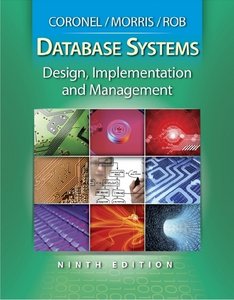
Database Systems design Implementation and Management

Sunday, February 26, 2012


DATABASE SYSTEMS: DESIGN, IMPLEMENTATION, AND MANAGEMENT, NINTH EDITION, a market-leader for database texts, gives readers a solid foundation in practical database design and implementation. The book provides in-depth coverage of database design, demonstrating that the key to successful database implementation is in proper design of databases to fit within a larger strategic view of the data environment. -Updated coverage of data models. -Improved coverage of normalization with a data modeling checklist. -Enhanced coverage of of database design and life cycle. -New review questions, problem sets, and cases throughout the book. With a strong hands-on component that includes real-world examples and exercises, this book will help students develop database design skills that have valuable and meaningful application in the real world.

Database Systems design Implementation and Management
or
Database Systems design Implementation and Management

Read more...
Related Posts with Thumbnails

Sponser Links

Followers

Sponser Links

  ©2009-10 | Disclaimer

Back to TOP